Your Trusted, Independent Hearing Service — Est. 2009

Your Trusted, Independent Hearing Service — Est. 2009

Earwax

Why Does My Ear Wax Smell?

Quick answer

Earwax can have a faint natural smell, which is usually nothing to worry about. However, a new, strong or unpleasant odour, particularly with discharge, pain, itching or hearing loss, may indicate an ear infection or another ear condition. The type of smell alone cannot identify the cause. If you notice these symptoms, seek advice from your GP. Sudden hearing loss, severe pain or symptoms of a significant infection require urgent medical advice. If your ears simply feel blocked without other concerning symptoms, an ear care specialist can check for earwax build-up and advise whether removal is appropriate.

Written and clinically reviewed by

John Beharrell

·

Consultant Audiologist

· HCPC

HAD00083

Published

· Updated

· Last reviewed

Key points

  • A faint smell is normal.

  • An unpleasant ear smell without pain is not necessarily caused by earwax. If the smell is new, strong or persistent, arrange an ear examination to check for infection or another underlying condition.

  • A strong smell with discharge or pain can mean an infection.

  • Don't clean deep inside your ear.

  • Get help if the smell comes with pain, discharge or fever.

A woman in profile cupping her hand behind her ear

Earwax often has a faint scent, which is quite normal. A strong, new or unpleasant smell can be a clue that something else is going on, such as trapped wax or an ear infection. This guide explains what different smells can mean, what you can safely do at home, and when to get your ears checked.

What is earwax?

Earwax (known as cerumen) is a natural, waxy mix of dead skin cells, oils and secretions from the ear canal. It traps dirt and dust, keeps the ear canal moist and helps to repel water.

Ear wax smell, texture and colour

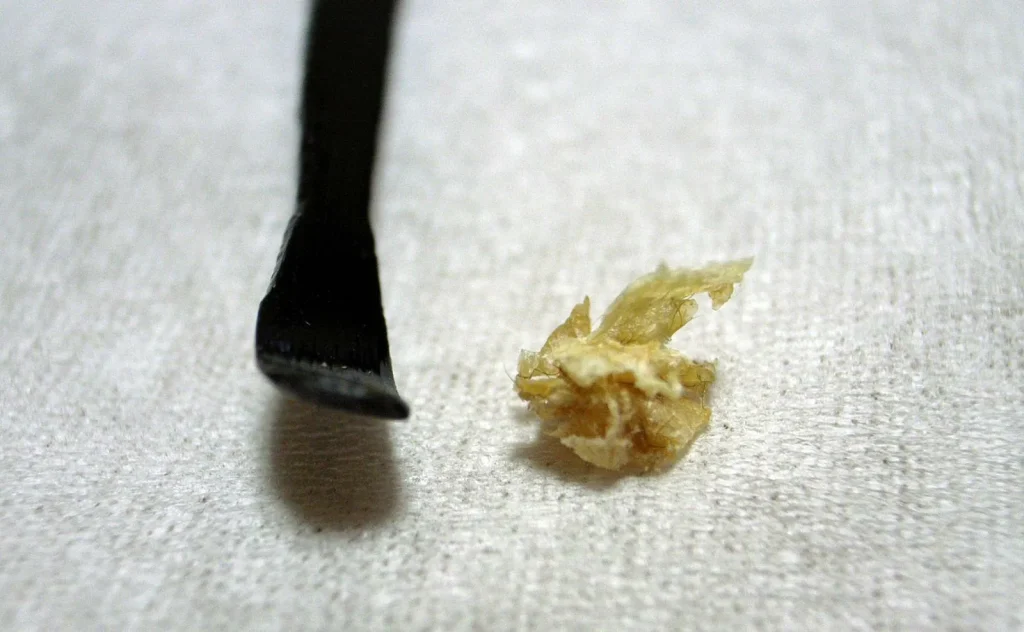
Ear wax comes in different colours and textures, and its smell varies from person to person. That's all normal.

The colour can range from light yellow to dark brown, and the texture from sticky to crumbly. Neither usually means there's a problem.

Healthy earwax contains a small number of natural odour compounds, and researchers have found that the amounts differ between people (Monell Chemical Senses Center, 2014). Most people would describe the normal smell as faint, slightly sweet or musky.

Why does ear wax smell like vinegar, nuts, cheese or fish?

People describe smelly earwax in lots of ways, from vinegary or sour to cheesy, fishy or musty. The description alone can't tell you the cause. What matters more is whether the smell is new or strong, and whether it comes with other symptoms, such as discharge, pain, itching or a change in your hearing.

A bad smell with those symptoms can be a sign of an ear infection or trapped wax. Get it checked by a GP, who can look properly inside your ear and tell you what is causing it.

What if my ear wax smells but doesn't hurt?

An unpleasant smell from the ear, even without pain, can have several causes. Although earwax build-up may sometimes contribute to irritation or trapped moisture, a persistent or strong odour can indicate an ear infection or another condition that needs assessment. If your ear feels blocked due to wax, ear drops may help soften the blockage and allow the wax to clear naturally. However, drops are not suitable for everyone, particularly if you have a perforated eardrum. If the blockage does not clear, professional earwax removal, such as microsuction, may be appropriate following an ear examination.

If you notice persistent, unpleasant-smelling discharge from your ear, even without pain, arrange an appointment with your GP. Although uncommon, these symptoms can sometimes be associated with cholesteatoma, an abnormal build-up of skin cells within the ear, usually behind the eardrum. Cholesteatoma requires specialist assessment and is usually treated surgically. Your GP can arrange referral to an ear, nose and throat (ENT) specialist if necessary.

Smelly or blocked ear? Our ear care specialists can look inside your ear and remove trapped wax with microsuction, from £65 for both ears. Book ear wax removal or call 0800 002 9503.

What can cause smelly ear wax?

  • Earwax build-up: Excessive earwax can cause a blocked sensation, reduced hearing, discomfort or tinnitus. It may sometimes contribute to irritation or trapped moisture, but a strong or persistent unpleasant odour is not a typical symptom of uncomplicated earwax build-up. Infection or another ear condition should be considered.

  • Outer ear infection (otitis externa): this can be caused by something irritating the ear canal, such as water, eczema or wearing earplugs. It can cause itching, pain and discharge.

  • Middle ear infection: usually caused by a virus such as a cold or flu. It can cause earache, a high temperature and sometimes discharge.

  • Something stuck in the ear: objects such as cotton bud tips can irritate the lining of the ear canal and lead to infection, so never put anything in your ear.

  • Skin conditions: eczema or psoriasis in the ear canal can cause inflammation and discharge, which can make earwax smell.

  • Cholesteatoma: An uncommon condition involving an abnormal build-up of skin cells within the ear, usually behind the eardrum. It can cause persistent, unpleasant-smelling discharge, gradual hearing loss and recurrent ear infections. If left untreated, it can damage structures within the ear. Anyone experiencing these symptoms should seek GP assessment, as referral to an ENT specialist may be necessary. Treatment usually involves surgery.
Smelly or blocked ears?

Book microsuction ear wax removal, from £65 for both ears. No GP referral needed.

A lump of dry, yellowish earwax on a white cloth

When to be concerned about smelly ear wax?

A faint smell isn't usually a cause for concern. Get your ears checked if:

  • the smell is strong, unpleasant or new

  • it comes with ear pain, discharge, itching, dizziness or a change in your hearing

  • it doesn't go away, or keeps coming back

An Interhearing ear care specialist can examine your ear canal and eardrum using an otoscope and identify visible earwax build-up or signs that further medical assessment may be needed. If excess earwax is present and removal is appropriate, microsuction may be recommended. However, if you have unexplained discharge, a persistent unpleasant smell or symptoms suggesting infection, you should seek medical advice from your GP rather than assume that earwax removal will resolve the problem.

Is smelly earwax linked to hearing loss?

Smelly earwax doesn't cause hearing loss by itself. But the things behind it can affect your hearing, such as a wax blockage or an ear infection. If a build-up of wax is the problem, professional removal such as microsuction can clear it. If we removed your wax and your hearing hasn't come back, contact us for your free follow-up check within 4 weeks and we'll advise on next steps.

Wondering, can ear wax cause tinnitus? Find out if earwax build-up could be behind that ringing in your ears.

Why see an Interhearing ear care specialist?

  • We use microsuction, a precise, water-free method, carried out while the clinician looks into your ear under magnification.

  • No GP referral needed. We can usually see you within 3 days, and offer same-day appointments where possible.

  • Wax removal costs from £65 for both ears. If we can't clear it all at the first visit, follow-ups are free (book within 4 weeks).

  • We're independent and family-run, with over 19,000 patients and clinics in Shrewsbury, Telford, Wolverhampton, Church Stretton, Oswestry, Chester, Powys, Warrington and Reading.

What our patients say

★★★★★ “…beats those ear wax drops hands down. Great value for £65. Both clinicians explained everything and were very considerate. Excellent service.” Trevor, Chester

★★★★★ “This procedure is so much better than the water system. The nurse explained everything thoroughly and was very friendly.” Shirley, Telford

★★★★★ “Very good service, informative, gentle and polite, it’s wonderful to have my hearing restored - won’t leave it as long next time.” Gary, Powys

Book ear wax removal online or call 0800 002 9503 (Monday to Friday 8am to 6pm, Saturday 9am to 1pm).

Earwax smell and your hearing health

A little earwax with a faint smell is nothing to worry about, and means your ears are being kept clean and protected. A strong or unpleasant smell is worth getting checked, especially if it comes with earache, a feeling of fullness, dizziness or hearing loss.

If you regularly experience earwax build-up, suitable ear drops may help soften the wax and allow it to clear naturally. If your ears remain blocked or the symptoms do not improve, an ear care specialist can examine your ears and advise whether professional removal is needed. Do not use ear drops if you have a perforated eardrum unless specifically advised by an appropriate healthcare professional. Read our guide on how to prevent earwax build-up.

Read more about the surprising link between earwax and genetics!

Next step

Get your ears checked

Book ear wax removal

Sources

  1. NHS: Ear infections (reviewed 16 Jan 2025; accessed 26 Oct 2026)

  2. NHS: Otitis externa (reviewed 16 Jan 2025; accessed 26 Oct 2026)

  3. NHS: Earwax build-up (reviewed 5 Jan 2024; accessed 26 Oct 2026)

  4. NHS: Cholesteatoma (reviewed 20 Feb 2025; accessed 26 Oct 2026)

  5. NHS: Hearing loss (reviewed 30 May 2025; accessed 26 Oct 2026)

  6. Monell Chemical Senses Center: Earwax odour compounds study (Prokop-Prigge et al., J Chromatogr B, 2014), ScienceDaily summary (accessed 26 Oct 2026)

Clinically reviewed by

Consultant Audiologist

BSc, MSc

HCPC-registered, HAD00083