What to do if you can’t get an NHS Audiology appointment
Written by
Interhearing
Published


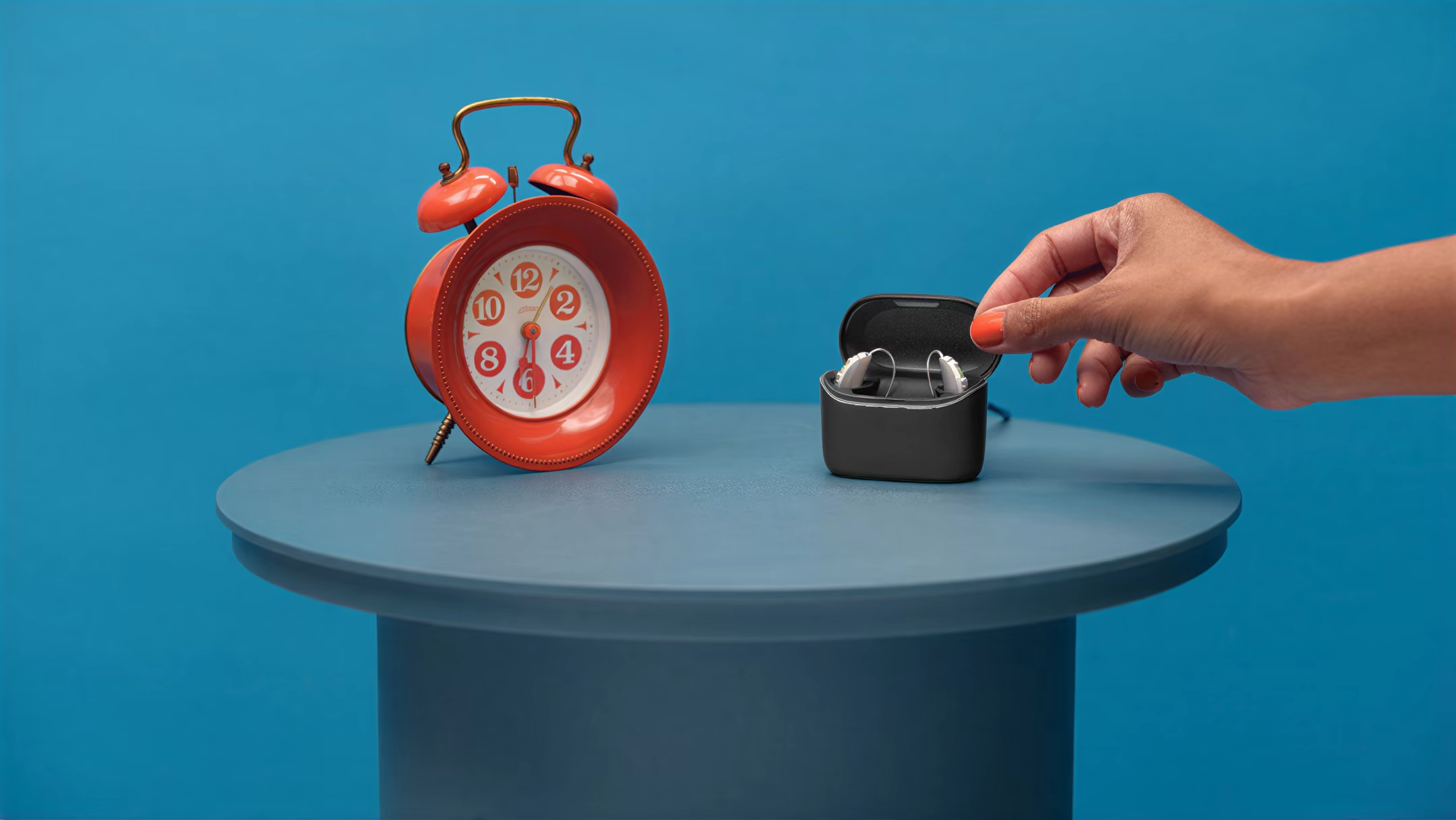




The NHS Appointment Dilemma!
Waiting for an NHS audiology appointment can be frustrating, especially if your hearing is affecting everyday life. You’re not alone.
Waiting times for NHS audiology vary by area, and in some areas people wait longer for assessments, follow-ups and reassessments. While you wait, it’s natural to worry about your hearing getting worse.
The NHS appointment dilemma isn’t just an inconvenience however, it can be a serious concern. With hearing loss linked to social isolation, depression and even dementia, many of us are fully aware that regular hearing tests and adjustments to our hearing aids are crucial for maintaining our hearing health and quality of life.
In this article, we’ll delve into the common issues experienced by those seeking timely NHS audiology care and explore the potential consequences and solutions to this problem, enabling you to prioritise your hearing health.
Understanding the NHS Audiology System
Why NHS Audiology Waiting Times Can Be Long
What Happens if My Hearing Gets Worse And I Can’t Get an NHS Appointment?
Alternative Options for Hearing Aid Support
Exploring Private Audiology Clinics
Interhearing Clinics – Independent, Professional Hearing Care
Self-Help Advice
Applying Noise Reduction Strategies
Conclusion: Taking Charge of Your Hearing Health
Other Useful Articles
Understanding the NHS Audiology System
NHS Audiology services are designed to provide hearing assessments and treatment, including the fitting of hearing aids, for those who are eligible. Typically, patients are referred to these services by their GP or another healthcare professional and put onto a waiting list.
Why NHS Audiology Waiting Times Can Be Long
NHS audiology services work hard to meet demand, but in some areas there can be delays in getting follow-up appointments and reassessments. Several factors can contribute, for instance:
High Demand: The increasing prevalence of hearing loss and a growing awareness of the impact of hearing loss on quality of life, has led to more people seeking help. This, in turn, has created a surge in demand for NHS audiology services.
Limited Resources: Like many NHS departments, audiology services continue to face resource constraints, including reported shortages of qualified audiologists in some areas, limiting the capacity of the NHS to meet the growing demand.
Prioritisation of Urgent Cases: In some instances, urgent cases, such as sudden hearing loss, may need to be prioritised, leading to longer wait times or the cancellation of routine appointments, including “non-urgent” referrals, follow-up appointments and reassessments.
The Ongoing Impact of COVID-19: While the acute phase of the pandemic seems long ago, its lingering effects, such as staff shortages and backlog of appointments, may still affect some NHS services, including audiology.
Administrative Delays: Administrative processes, including referrals, appointment scheduling and record-keeping can all contribute to possible delays.
What Happens if My Hearing Gets Worse And I Can’t Get an NHS Appointment?
Whether you are currently a hearing aid user or not, if your hearing worsens and you’re unable to secure an NHS appointment, it’s important to take action as soon as possible. You may wish to consider some of these options as a starting point:
Private Audiology Clinics: You can usually book directly, often with shorter waits, though there is a cost. It’s worth comparing providers, including independent clinics, which may offer a wide choice of hearing aids from different manufacturers.
Online Hearing Tests: These can provide a preliminary assessment of your hearing, and although an online test cannot replace a full, professional evaluation, they can be a helpful first step for anyone considering hearing aids for the first time. Online tests are very simple and only take a few minutes.

Alternative Options for Hearing Aid Support
If you already wear hearing aids and feel that your hearing is getting worse, it’s best to get support as soon as possible and avoid that feeling of isolation which can often come when we are struggling to hear. Exploring alternative options can provide the support you need and enable you to gain quicker access to professional hearing care.
Exploring Private Audiology Clinics
Private audiology clinics offer an alternative to NHS services, and usually provide a wide range of services, including hearing assessments, hearing aid fittings, and comprehensive aftercare and support services, such as re-assessments, hearing aid tuning and repairs and ear wax removal.
While there may be costs associated with private hearing care, many people find the benefits outweigh the expense, particularly given the impact of untreated hearing loss on quality of life and its potential link to dementia.
By choosing a private clinic, especially those led by qualified, experienced audiologists, you can often benefit from shorter waiting times, professional, personalised care and access to the latest hearing aid technology. You might also find that some private health insurance policies cover part of the cost, so it’s always worth checking the details of personal or workplace health care plans, just in case.
Interhearing Clinics – Independent, Professional Hearing Care
Interhearing is an established independent provider of hearing care services, offering independent audiology services to meet a wide range of hearing needs. With clinics conveniently located in and around Shropshire and the West Midlands, serving the areas of Shrewsbury, Telford, Newport, Whitchurch, Church Stretton, Oswestry, Wolverhampton and Cannock, an experienced team provide comprehensive hearing assessments, hearing aid fittings, ear wax removal, and aftercare services.
As an independent hearing care service, Interhearing provide a personalised service and a wide selection of the latest hearing aids to suit various budgets, hearing needs and lifestyles. And as a family-owned service, are committed to finding the right solutions for your hearing, with no GP referral needed.
Self-Help Advice
Empowering yourself to better manage your hearing loss with some simple steps can also be very helpful. For example:
Regularly checking and replacing your hearing aid batteries
Proper cleaning and maintenance of your hearing aids
Being mindful of noisy environments and applying noise reduction strategies
Employing effective communication strategies
Applying Noise Reduction Strategies
Choose quieter environments
It is important that hearing loss does not lead to isolation, but you might benefit from opting for quieter restaurants or other low-noise settings when meeting up with friends or family.
Reduce background noise
For clearer hearing, consider turning off TVs, radios and other background noise when you are holding conversations.
Trial New Hearing Aids
Many hearing aids now have advanced features to help reduce background noise, such as directional microphones, noise reduction technology and feedback cancellation. There are also a number of specialised devices available via your audiologist that can connect with your hearing aids to give greater hearing clarity.
Features vary between hearing aid models, so you might like to book a hearing aid trial with an independent provider – free of charge and without obligation – this will help you determine whether different hearing aids could improve your hearing.
Employing Effective Communication Strategies
Try to sit facing the speaker and as far away from background noise as possible.
Ask for clarification – it is ok to ask the speaker to repeat themselves or to talk more slowly.
Pay attention to visual cues such as facial expressions, body language and lip movements.
Try to minimise distractions so that you can focus on the conversation.
Consider using assistive listening devices such as hearing aids, remote microphones or Bluetooth devices, which connect to your hearing aids, can really enhance your communication experience and reduce listening fatigue.
Connect your hearing aids to Hearing Loops – commonly found in public places such as theatres, churches and banks, this system can help you to hear more clearly, especially in noisy environments or when the speaker is further away.
By switching your hearing aids to the ‘T’ setting, you can pick up the magnetic signal from the loop to improve your listening experience.
Conclusion: Taking Charge of Your Hearing Health
While NHS audiology services remain an important resource for hearing care, waiting times vary by area. Taking charge of our own hearing health, by considering the hearing aid options available to us and using effective self-help and communication strategies, means we can take positive steps towards better hearing.
A growing awareness that untreated hearing loss can significantly impact our quality of life, means that the most important thing is to take action and prioritise our hearing. Exploring our options has never been easier and with free consultations and hearing aid trials offered at many independent audiology services, there’s never been a better time to get proactive about our hearing health.
To find out more about free hearing aid trials or consultations at one of Interhearing’s independent audiology clinics covering Shropshire, Shrewsbury, Telford, Newport, Whitchurch, Church Stretton, Oswestry, Wolverhampton and Cannock, simply click here or call our helpful team on 0800 002 9503.
At Interhearing, you can book directly, with no GP referral needed.
Other Useful Articles
Struggling with your NHS Hearing Aids? How Private Hearing Aid Technology Could Improve Your Hearing & Your Life!
Private Hearing Aids vs NHS Hearing Aids: What’s the Difference?
Oticon Intent Hearing Aids: Compare Prices Before You Buy


